The Most Iconic Rolex Models and Their History
The most iconic Rolex models are the Submariner, Daytona, GMT Master, Datejust, Day Date, Explorer, Explorer II, Sea Dweller, Milgauss, and Oyster Perpetual. Each became significant for a different reason, from professional diving and aviation to motorsport, exploration, precision, and everyday luxury. Their lasting appeal comes from recognizable designs, technical innovation, and decades of history.
What Makes a Rolex Model Iconic?
A Rolex model becomes iconic when its design, purpose, history, and cultural influence remain recognizable over many years. Some watches became famous because they solved practical problems for professionals, while others became symbols of achievement and personal style.
Rolex history is closely connected to the development of modern wristwatches. The brand introduced the Oyster case in 1926, creating a highly water resistant wristwatch design built around a sealed case. This development helped establish the foundation for many of the professional and classic Rolex watches that followed.
Another important milestone came with the development of automatic winding technology and the continued refinement of precision, durability, and case construction. Instead of relying on a single breakthrough, Rolex built its reputation through decades of incremental engineering improvements.
This history is important when evaluating iconic Rolex models because their popularity is not based only on appearance. Many references were designed around a specific need, and their original purpose continues to influence how collectors understand them today.
The Rolex Oyster Perpetual and the Beginning of a Modern Classic
The Oyster Perpetual represents one of the most important foundations of Rolex watchmaking. Its name combines two defining ideas in Rolex history: the Oyster case and automatic Perpetual movement technology.
The Oyster case was developed to provide greater protection against water and dust, while the Perpetual system allowed the movement to wind automatically through the motion of the wearer. Together, these technologies helped establish the practical wristwatch as something that could be worn consistently rather than treated as a delicate accessory.
The Oyster Perpetual also demonstrates an important principle behind Rolex design. It does not depend on an elaborate complication or an oversized case to remain recognizable. Its simple proportions, clean dial, and versatile character have allowed the model family to remain relevant for generations.
For collectors interested in the history of Rolex watches, the Oyster Perpetual is particularly important because it represents the core philosophy from which many later models developed.
The Rolex Datejust and the Birth of an Everyday Icon
Introduced in 1945, the Rolex Datejust became one of the defining classic Rolex models of the twentieth century. Its significance comes from combining practical functionality with a design suitable for everyday wear.
One of its most recognizable features is the date display positioned at three o'clock. Rolex later introduced the Cyclops lens over the date, which became another instantly recognizable element of the brand's design language.
The Datejust is important because it occupies a unique position in Rolex history. It can appear formal without being restricted to formal occasions, making it suitable for professional environments, celebrations, and daily wear.
Its long production history has also resulted in a wide range of case sizes, materials, dial designs, bracelets, and references. This variety makes the Datejust particularly interesting to collectors because two watches that appear similar at first glance can have meaningful differences in their production period and configuration.
The Rolex Submariner and the Rise of the Dive Watch
The Rolex Submariner is arguably the most recognizable professional Rolex sports watch. Introduced in 1953, it was designed for underwater use and became closely associated with diving.
The original concept was straightforward but demanding. A diver's watch needed strong water resistance, excellent legibility, a durable case, and a timing mechanism that could be operated underwater. The Submariner brought these requirements together in a design that eventually became one of the most influential dive watch formats in history.
The rotating bezel is central to its identity. Divers can use the bezel to track elapsed time while underwater, providing a simple reference for managing a dive.
The Submariner's visual language has remained remarkably consistent. Its dark dial, luminous markers, Mercedes style hour hand, and rotating bezel have become instantly recognizable.
The importance of the Submariner extends beyond diving. Over decades, the model evolved from specialized professional equipment into a luxury sports watch while retaining the visual characteristics that established its identity.
The Rolex GMT Master and the Era of International Travel
The Rolex GMT Master was developed during the growth of commercial aviation and international travel. Its purpose was to help pilots and travelers keep track of multiple time zones.
The defining feature is its additional 24 hour hand, which works with a 24 hour scale to indicate another time zone. This made the watch particularly useful for people crossing international time zones regularly.
The GMT Master became one of the most historically significant Rolex watches because its functionality was directly connected to a changing world. As international air travel expanded, the ability to read more than one time zone became increasingly valuable.
Its bezel also became a major part of its identity. Different bezel colors and configurations have contributed to the strong collector interest surrounding vintage and modern GMT Master references.
The model eventually evolved into the GMT Master II, which introduced further technical development while preserving the central concept of simultaneous time zone tracking.
The Rolex Daytona and Motorsport History
The Rolex Cosmograph Daytona is one of the most famous chronograph watches ever produced. Its history is closely associated with motorsport and precision timing.
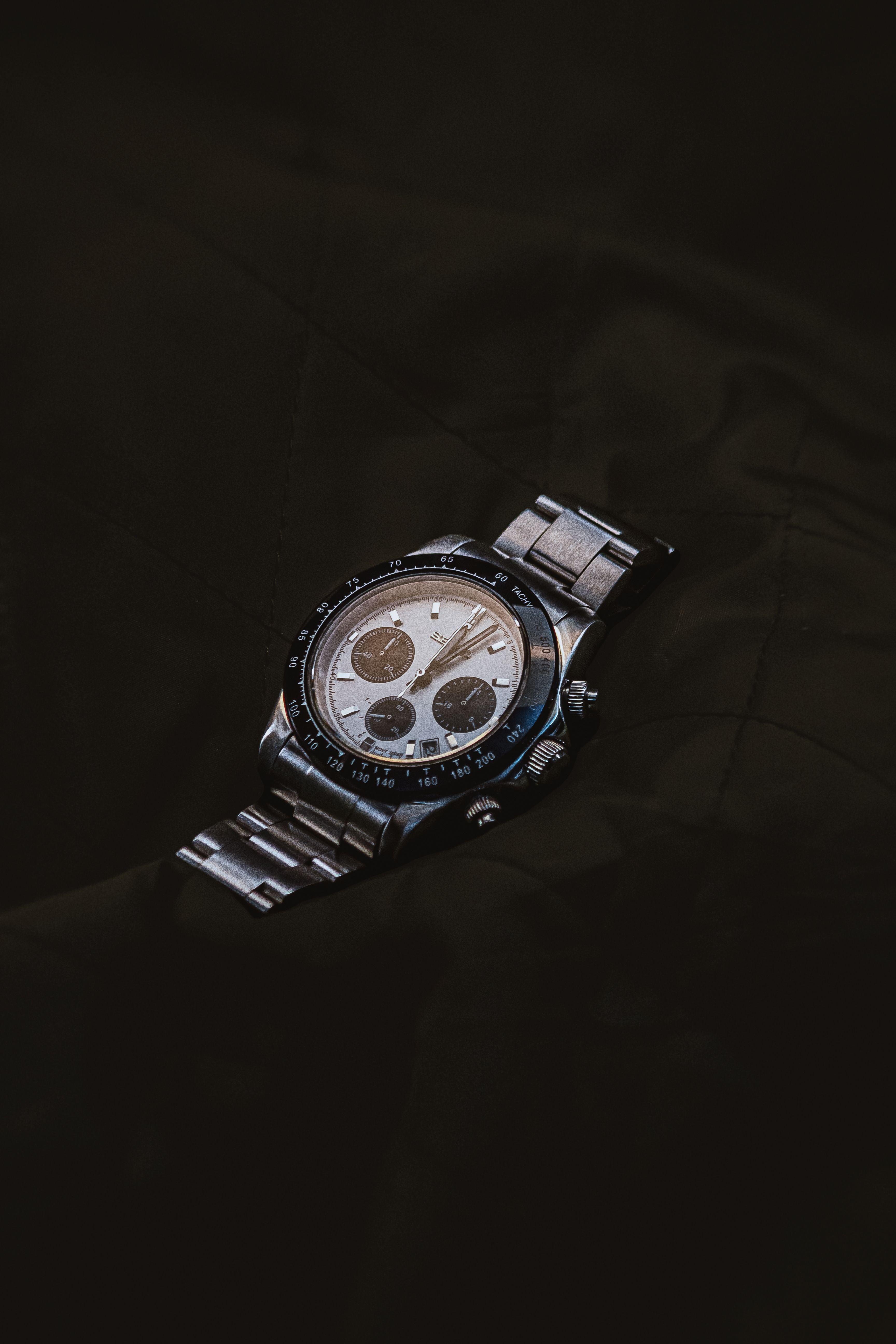
The Daytona was introduced in the 1960s and was named after Daytona Beach, Florida, a location strongly connected with motor racing. Its chronograph functionality allows the wearer to measure elapsed time, while the tachymeter scale can be used to calculate speed over a known distance.
The Daytona became particularly important to collectors because of its connection with racing and its distinctive chronograph layout. Early manually wound examples have become especially significant within vintage Rolex collecting.
The watch also gained enormous cultural recognition through its association with actor and racing enthusiast Paul Newman. Certain vintage Daytona configurations became known among collectors by his name, although the term does not represent an official Rolex model designation.
The Daytona demonstrates how a practical tool watch can evolve into a highly desirable luxury object without losing its original identity.
The Rolex Day Date and the Presidential Image
The Rolex Day Date was introduced in 1956 and became the first wristwatch to display both the day of the week and the date through windows on the dial.
This technical achievement gave the model its distinctive identity. Unlike the Datejust, which displays only the date, the Day Date presents the full day and date information at a glance.
The model was produced in precious metals, contributing to its position as one of the most prestigious Rolex watches. Its association with influential figures and public personalities also helped create its strong cultural reputation.
The Day Date is often recognized by its distinctive bracelet, which became closely associated with the model. Its combination of precious metal construction, calendar functionality, and formal design made it an important expression of luxury within Rolex history.
The Rolex Explorer and the Spirit of Exploration
The Rolex Explorer was created around the idea of exploration and reliability under demanding conditions. Its history is strongly connected with mountaineering and the growing interest in extreme environments during the twentieth century.
The Explorer became known for its simple and highly legible dial. The prominent 3, 6, and 9 numerals provide immediate recognition while reinforcing the watch's functional purpose.
Unlike complicated watches designed around multiple features, the Explorer focuses on readability and durability. This simplicity is one of its greatest strengths.
For collectors, the Explorer represents an important part of Rolex's tool watch history. It shows how a relatively restrained design can become iconic when every element serves a clear purpose.
The Rolex Explorer II and Extreme Environments
The Explorer II expanded the exploration concept into environments where conventional indicators could become difficult to interpret.
Introduced in 1971, the watch featured a 24 hour hand and fixed 24 hour bezel. This could help distinguish between day and night in locations where natural light was limited or absent, such as caves or polar environments.
The Explorer II developed a distinct identity rather than simply becoming another version of the original Explorer. Its larger case and additional 24 hour indication gave it a more specialized appearance.
The model is particularly interesting because it demonstrates how Rolex adapted familiar technology to unusual environments. Its design was not created simply for visual impact. Each major feature had a practical reason.
The Rolex Sea Dweller and Professional Diving
The Rolex Sea Dweller was developed for professional divers who needed greater underwater capability than the standard Submariner could provide.
One of its defining technologies is the helium escape valve. The feature was developed to address pressure-related problems encountered during saturation diving. During extended underwater operations, helium can enter a watch case. When pressure is reduced, trapped helium can create enough internal pressure to damage the crystal or case.
The helium escape valve provides a controlled way for that gas to exit.
This technology illustrates why professional Rolex watches are historically significant. Features that may appear unusual to an everyday wearer were developed to solve real engineering problems faced by specialized professionals.
The Sea Dweller therefore occupies an important position between traditional dive watches and highly specialized professional equipment.
The Rolex Milgauss and Scientific Innovation
The Rolex Milgauss was introduced in 1956 for people working in environments with strong magnetic fields. Scientists, engineers, and technicians could encounter magnetic interference that affected mechanical watch movements.
The Milgauss addressed this problem through magnetic shielding designed to protect the movement.
The name itself reflects its purpose, combining the model name with the gauss measurement of magnetic fields. The watch was designed to withstand magnetic fields of up to 1,000 gauss under its original specifications.
Its historical importance comes from showing that Rolex was not focused exclusively on diving, travel, or luxury. The brand also developed watches around scientific and technical environments.
The Milgauss later became known for distinctive design elements, including versions featuring an unusual lightning bolt shaped seconds hand. This gave the model a personality that separated it from other Rolex watches.
How Rolex Models Evolved Over Time
Understanding Rolex history requires looking beyond individual models. Rolex generally preserves recognizable design concepts while gradually improving the underlying technology.
Case construction, movement efficiency, water resistance, materials, bracelets, crystals, bezels, and magnetic resistance have all developed over time. As a result, two watches from the same model family can look similar while having significantly different technical specifications.
This is one reason reference numbers and production periods matter to collectors. A model name alone does not always tell the complete story.
Vintage Rolex watches can differ considerably from modern examples because of changes in movement technology, case dimensions, dial production, bracelet construction, and other details.
For anyone researching iconic Rolex models, understanding this evolution is more useful than simply memorizing model names.
Why Iconic Rolex Models Remain Valuable to Collectors
The appeal of iconic Rolex watches comes from several factors working together. Historical importance gives a model a story, while recognizable design creates long-term identity. Technical development provides another layer of interest, particularly for collectors who care about how watches solve practical problems.
Scarcity can also influence collector interest, especially when particular vintage references, dial configurations, or discontinued specifications are difficult to find.
However, popularity should not automatically be confused with value. A famous model can have many different references, and condition, originality, provenance, configuration, and market demand can all affect how collectors evaluate a particular watch.
This is why researching the exact reference is often more useful than simply searching for the model name.
Common Mistakes When Researching Iconic Rolex Watches
One common mistake is assuming that every Rolex with the same model name is essentially identical. Rolex models have evolved through many references, and differences in production era can significantly change the characteristics of a watch.
Another mistake is focusing only on appearance. A watch may look correct while having replacement components, refinished parts, or modifications that affect its originality.
Buyers can also make the mistake of treating a high market price as proof of authenticity or quality. Price alone cannot establish whether a watch is genuine, original, or correctly represented.
A better approach is to study the reference, approximate production period, movement, dial, case, bracelet, and condition as separate parts of the overall evaluation.
Common Rolex Myths and the Real Facts
One common myth is that every old Rolex automatically becomes more valuable with age. Age can increase historical interest, but age by itself does not guarantee stronger value. Condition, rarity, originality, demand, and specific reference details can be equally important.
Another myth is that Rolex designs never change. The visual identity of many models remains highly consistent, but the engineering underneath has evolved substantially over the decades.
There is also a misconception that the most expensive Rolex model must be the most historically important. These are different concepts. A relatively simple model can have enormous historical significance because of the role it played in watchmaking or professional use.
The real value of Rolex history comes from understanding why a model was created, how it developed, and what makes a particular reference distinctive.
What Makes These Rolex Models Effective as Tool Watches?
The most successful professional Rolex models share a common philosophy: the design supports the function.
The Submariner uses a rotating bezel for elapsed diving time. The GMT Master provides a second time zone. The Daytona measures elapsed time and supports speed calculations. The Explorer prioritizes legibility, while the Sea Dweller addresses the demands of saturation diving.
These functions are not simply decorative additions. They explain why the watches became important in the first place.
Over time, their practical origins became part of their cultural identity. That transition from professional equipment to luxury collectible is one of the most fascinating aspects of Rolex history.
How to Understand a Rolex Model's History
The best way to understand a Rolex model is to connect its design with the problem it was created to solve.
Start with the model's original purpose, then consider when it was introduced and how its specifications changed. After that, examine the details that distinguish different references.
This approach gives collectors a stronger understanding of what they are looking at. Instead of seeing a Rolex simply as an expensive watch, they can see the engineering decisions, historical circumstances, and design evolution behind it.
That perspective is especially valuable when comparing vintage and modern Rolex watches.
Rolex History in the Modern Collecting World
Modern collectors often appreciate Rolex watches because they combine historical continuity with contemporary engineering. A current production watch may share recognizable characteristics with a model created decades earlier while offering significant improvements in precision, durability, and materials.
This continuity is one of the strongest elements of Rolex's identity. The watches remain recognizable without being technically frozen in time.
For collectors, that creates an unusual opportunity. A Rolex can represent both a historical object and a modern mechanical instrument.
The most iconic models therefore continue to attract attention not simply because they are famous, but because their original stories remain understandable and relevant.
Summary of the Most Important Insights
The most iconic Rolex models became important for different reasons. The Submariner represents professional diving, the GMT Master represents international travel, the Daytona represents motorsport timing, the Explorer represents exploration, the Sea Dweller represents saturation diving, the Milgauss represents scientific environments, and the Datejust and Day Date represent Rolex's classic approach to everyday and formal watchmaking.
The deeper lesson is that Rolex history is built around purposeful design. These watches became icons because their appearance, technology, and original purpose developed together over many decades.
Key Takeaways
The history of iconic Rolex models is much more than a collection of famous names. Each important model tells a story about a particular challenge, environment, or lifestyle that influenced its design.
The strongest way to evaluate a Rolex is to look at the exact reference and understand its history rather than relying only on the model name. Production period, originality, condition, specifications, and configuration can all change the significance of a particular watch.
The lasting appeal of Rolex comes from continuity. Designs remain recognizable while technology continues to evolve, allowing historic concepts to remain relevant to modern collectors.
Frequently Asked Questions About Iconic Rolex Models
What Is the Most Iconic Rolex Model?
The Rolex Submariner is often considered one of the most iconic Rolex models because its design has become closely associated with the modern luxury dive watch. However, the Daytona, Datejust, GMT Master, and other models have equally important places in Rolex history.
Which Rolex Model Has the Most Important History?
There is no single answer because different models represent different milestones. The Oyster Perpetual reflects the foundation of Rolex's automatic and water resistant watchmaking, while the Submariner, GMT Master, Daytona, Explorer, and Sea Dweller represent major developments in professional watches.
Why Is the Rolex Submariner So Famous?
The Submariner became famous because it combined strong water resistance, legibility, and a rotating timing bezel in a durable design created for diving. Its recognizable appearance later became influential far beyond professional diving.
What Makes the Rolex Daytona Special?
The Daytona is a chronograph associated with motorsport and precision timing. Its chronograph functionality, tachymeter scale, distinctive design, and long collecting history have made it one of the most recognized Rolex models.
What Is the Difference Between the GMT Master and Submariner?
The GMT Master was designed primarily for tracking multiple time zones, while the Submariner was designed for underwater diving. Their bezels reflect these different purposes, with the GMT Master using a 24 hour scale and the Submariner using a timing bezel for elapsed minutes.
Why Do Vintage Rolex Watches Attract Collectors?
Vintage Rolex watches can attract collectors because of their age, historical importance, distinctive references, original configurations, and scarcity. However, age alone does not determine desirability. Condition and originality can be extremely important.
Are Modern Rolex Watches Still Historically Important?
Yes. Modern Rolex watches continue the development of long established model families. While they may use contemporary engineering and materials, many retain design characteristics that connect them with earlier generations.
Conclusion
The most iconic Rolex models are memorable because they represent more than luxury. They document the evolution of the mechanical wristwatch and show how watchmaking responded to diving, aviation, exploration, motorsport, science, and everyday life.
The Submariner, GMT Master, Daytona, Datejust, Day Date, Explorer, Explorer II, Sea Dweller, Milgauss, and Oyster Perpetual each occupy a different place in that history. Their stories explain why certain designs remain recognizable decades after their introduction.
For anyone considering a Rolex, studying that history can make the experience far more meaningful. Rather than choosing only by appearance, take the time to understand the model, reference, purpose, and evolution behind the watch. The right Rolex is not simply a timepiece with a famous name. It is a piece of watchmaking history that can continue to tell its story for generations.