Rolex Daytona Guide: Everything Collectors Need to Know
The Rolex Daytona is a high-performance mechanical chronograph created for timing events and closely connected with motor racing. First introduced in 1963, the model has evolved through several important generations while retaining its distinctive three-register layout and tachymetric scale. For collectors, the most important factors are reference, movement, condition, originality, configuration, provenance, and long-term service history.
What Is the Rolex Daytona?
The Rolex Daytona, officially known as the Oyster Perpetual Cosmograph Daytona, is a mechanical chronograph designed around precise short-term time measurement. A chronograph allows the wearer to start, stop, and reset a separate timing function, while the tachymetric scale on the bezel can be used to calculate average speed over a measured distance. These functions are central to the Daytona's identity rather than simply decorative features.
The model was introduced in 1963 and has been continuously developed since then. Its design combines a compact 40 mm case with a highly recognizable dial layout, pushers for the chronograph, and a tachymetric bezel. Although modern versions use advanced materials and movements, the overall visual language remains closely connected to the original racing concept.
For collectors, this continuity is one of the Daytona's greatest strengths. A Daytona from a previous generation can look immediately related to a current model, yet differences in movement, dial, bezel, case construction, bracelet, and production period can make individual references substantially different collecting propositions.
The History Behind the Rolex Daytona
The Daytona's history is inseparable from motor racing. Its name reflects Daytona Beach, Florida, a place with a long association with speed and racing. Rolex describes the Daytona as a chronograph whose history was forged through its relationship with motorsport and endurance racing. The tachymetric scale introduced with the model in 1963 reinforced this purpose by allowing speed to be read using the chronograph function.
The early Daytona period is particularly important to collectors because vintage examples can contain design details that are no longer found on modern watches. Small differences in dial printing, sub-dial configuration, bezel markings, case details, and production characteristics can significantly affect historical interest.
The next major stage came with the introduction of automatic winding technology. Rolex's history identifies calibre 4030 as the self-winding chronograph movement used during this period. Engineers extensively modified the underlying mechanism to improve reliability for the Daytona.
Another major turning point came with calibre 4130. Rolex developed the movement specifically for the Daytona and introduced it around the turn of the millennium. Its architecture reduced the number of components used for the chronograph function, while its vertical clutch helped deliver precise chronograph engagement.
The modern generation brought another significant technical update with calibre 4131. This movement incorporates Rolex's Chronergy escapement, Paraflex shock absorbers, and a blue Parachrom hairspring. It also provides approximately 72 hours of power reserve.
Why the Daytona Matters to Collectors
A collectible watch is rarely important because of one specification alone. The strongest examples usually combine historical significance, recognizable design, technical interest, scarcity, condition, and a compelling story. The Daytona brings many of these characteristics together.
Its racing connection gives the model a clear purpose. Its chronograph architecture provides mechanical interest. Its relatively consistent design creates a recognizable family across decades. At the same time, changes between generations create opportunities for collectors to specialize in specific references or production periods.
This makes the Rolex Daytona more than a luxury chronograph. For many collectors, it represents a study in how a single watch can evolve without losing its original identity.
Understanding Rolex Daytona References
The reference number is one of the most important pieces of information when evaluating a Daytona. A reference identifies a particular configuration and generation, helping distinguish differences in materials, bezel construction, movement generation, and other specifications.
Modern collectors should understand the distinction between a model name and a reference. Saying that a watch is a "Rolex Daytona" describes the collection, but the reference provides much more precise information about the actual watch.
For example, reference 126500LN represents the current Oystersteel Daytona with a black Cerachrom bezel. It uses a 40 mm Oyster case, calibre 4131, sapphire crystal, and an Oyster bracelet. Its stated water resistance is 100 metres, and Rolex lists its precision at -2/+2 seconds per day after casing.
A collector should therefore avoid evaluating a Daytona only by its appearance. Two watches can look similar while representing different generations and having different movements or production characteristics.
How the Daytona Chronograph Works
The chronograph is the mechanical heart of the Daytona. When activated, the central seconds hand measures elapsed seconds while the sub-dials record additional intervals. On the current Daytona, the 30-minute counter is positioned at 3 o'clock and the 12-hour counter at 9 o'clock, while the small seconds display sits at 6 o'clock.
The tachymetric scale adds another layer of functionality. When a known distance is measured, the chronograph can be used with the scale to determine average speed. This explains why the bezel is such an important part of the Daytona's visual identity.
Modern calibre 4131 uses a column wheel and vertical clutch for the chronograph mechanism. The vertical clutch is particularly relevant because it allows the chronograph to engage precisely while helping preserve chronometric performance.
For collectors, understanding these functions makes the watch easier to appreciate. The Daytona's design is not simply an arrangement of attractive sub-dials. Its appearance follows the practical requirements of mechanical timing.
The Modern Rolex Daytona
The current Daytona collection includes configurations in Oystersteel, yellow gold, white gold, Everose gold, and platinum, along with different dial, bezel, and bracelet combinations. This gives collectors considerable variety while keeping the core Daytona identity intact.
The Oystersteel reference 126500LN is particularly important in understanding the current generation. It measures 40 mm and features a black monobloc Cerachrom ceramic bezel with a moulded tachymetric scale. The watch uses calibre 4131 and has approximately 72 hours of power reserve.
The platinum version introduces another distinctive feature. Current 950 platinum Daytona models use a transparent sapphire case back, allowing the wearer to see the decorated movement. Rolex states that the platinum version has an oscillating weight made from 18 kt yellow gold, visible through the transparent case back.
These details matter because modern Daytona collecting is not simply about choosing between different colors. Material, bezel, dial, bracelet, and movement characteristics can completely change the personality and collecting appeal of a reference.
Why Condition Matters So Much
Condition is one of the most important factors when evaluating a collectible Daytona. A watch can be old without being desirable, and a newer watch can be highly collectible when it has been preserved correctly.
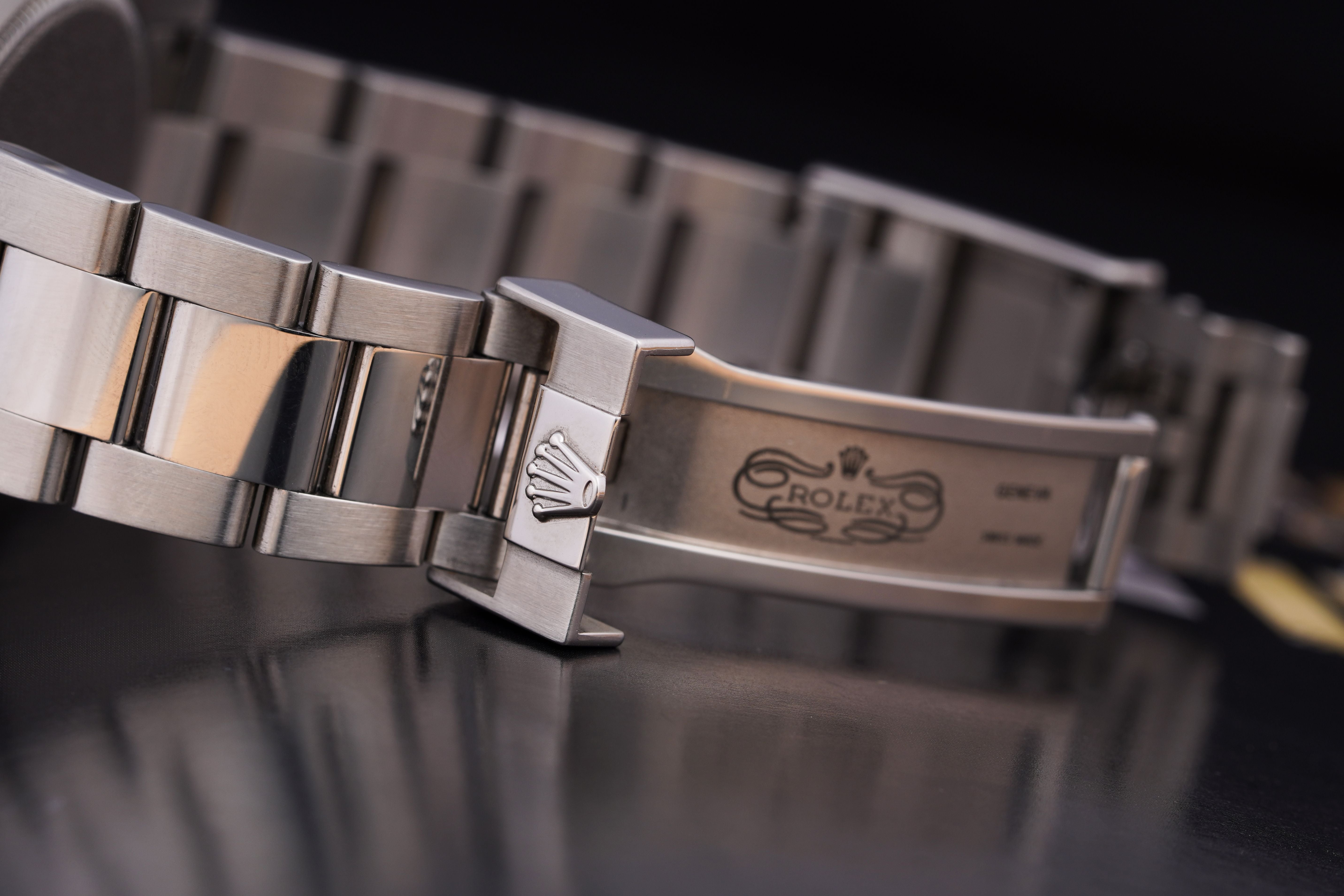
Collectors should pay attention to the case, bezel, crystal, bracelet, clasp, dial, hands, and movement. Excessive polishing can change the original shape of a case. Damage to the bezel can affect both appearance and originality. A stretched bracelet can also indicate extensive use.
The key principle is originality. A watch that retains its correct components for its production period can be more compelling than an example that has accumulated replacement parts over time.
Service history also matters. Mechanical watches require maintenance, but servicing should be considered alongside originality. A properly maintained watch can be a better ownership proposition than one that has simply been stored for decades without professional attention.
Originality and Provenance
For serious collectors, provenance can add another layer of confidence. Documentation, service records, purchase history, and other supporting evidence can help establish a watch's background.
However, paperwork should never replace physical examination. A complete set of documents does not automatically prove that every component of a watch is correct. Collectors should evaluate the watch itself, including reference details, serial information, dial configuration, case characteristics, movement, bracelet, and condition.
The strongest approach is to treat provenance as supporting evidence rather than the sole basis for authenticity.
What Makes a Daytona Effective as a Collector's Watch?
The Daytona's effectiveness as a collectible comes from the combination of recognizable design, technical development, historical continuity, and strong identity.
Its design has remained recognizable for decades without becoming mechanically stagnant. The movement has evolved from earlier chronograph technology to increasingly integrated in-house engineering. Modern examples demonstrate how materials, precision, shock resistance, winding efficiency, and chronograph operation have continued to develop.
That balance is important. A watch that changes too dramatically can lose its connection to its heritage. A watch that never changes can become technically outdated. The Daytona has generally taken a middle path, preserving its core character while improving the mechanics beneath the dial.
Common Mistakes Daytona Collectors Make
One common mistake is buying based entirely on appearance. A Daytona may look exceptional in photographs, but collectors need to understand its exact reference and production characteristics before making a serious purchase decision.
Another mistake is assuming that newer automatically means better. Modern movements offer impressive technical improvements, but vintage and discontinued references can have historical characteristics that make them more interesting to a particular collector.
Ignoring condition is another costly error. Collectors sometimes focus heavily on rarity while overlooking polishing, replaced parts, damaged components, or inconsistent details.
It is also a mistake to assume that every original-looking component is necessarily correct for the watch. Collecting requires attention to period-correct details. A dial, bezel, bracelet, or set of hands can appear genuine while still being incorrect for a particular reference.
Rolex Daytona Myths and the Real Facts
One common myth is that every Daytona is equally rare. The reality is more complicated. Different references, configurations, production periods, and materials have different levels of scarcity and collector interest.
Another myth is that a Daytona should never be serviced because servicing reduces collectibility. In reality, mechanical watches require appropriate maintenance. The important issue is how the service was performed and whether unnecessary replacement or alteration affected the watch's originality.
There is also a misconception that the value of a Daytona can be predicted simply by looking at its retail price. Collecting is more complex than that. Market value can be influenced by reference, condition, originality, configuration, provenance, availability, demand, and broader collector sentiment.
Perhaps the most important fact is that rarity alone does not guarantee desirability. Historical relevance, condition, originality, and collector demand all contribute to the appeal of a particular Daytona.
How to Evaluate a Rolex Daytona Before Buying
A serious evaluation should begin with the exact reference. Once the reference is identified, the collector can determine whether the case, movement, dial, bezel, bracelet, and other components correspond to the expected configuration.
The next step is condition. Examine the case shape and finishing, look closely at the dial and hands, inspect the bezel, and assess bracelet wear. The objective is not to find a watch that has never been worn, but to understand exactly what has happened to the watch throughout its life.
Movement condition should also be considered. A chronograph contains more mechanical components than a simple time-only watch, so proper operation matters. The start, stop, and reset functions should behave correctly, while unusual sounds or inconsistent operation deserve professional attention.
Finally, consider provenance and documentation. A well-documented watch can provide additional confidence, but physical examination remains essential.
Why Calibre 4131 Matters
Calibre 4131 represents the latest major movement development in the Daytona family. Rolex describes it as an entirely developed and manufactured mechanical chronograph movement with a reduced number of components, a Chronergy escapement, Paraflex shock absorbers, and a blue Parachrom hairspring.
Its approximately 72-hour power reserve is also significant for everyday ownership. A collector can remove the watch for a period of time and still have a substantial reserve before the movement stops.
The movement also demonstrates an important principle in modern watch collecting. Technical improvements do not always need to produce a dramatically different appearance. The current Daytona can remain visually familiar while the engineering inside becomes more sophisticated.
Caring for a Rolex Daytona
Proper care begins with understanding that a Daytona is a mechanical instrument, not simply a decorative object. Avoid unnecessary impacts, use the chronograph correctly, and keep the watch clean and dry.
Modern Daytona models are rated to 100 metres of water resistance, but water resistance is not permanent. Seals and gaskets can age, so appropriate inspection and maintenance remain important.
Storage also matters. A watch should be protected from unnecessary impacts, extreme conditions, and situations that could damage the bracelet, crystal, bezel, or case. When maintenance is required, qualified watchmaking expertise is essential.
Rolex Daytona Collecting Strategy
There is no single correct way to build a Daytona collection. Some collectors focus on vintage references, others prefer modern movements, while others concentrate on specific materials, dial configurations, or historically important generations.
A focused strategy is often more rewarding than buying randomly. Understanding why a particular reference interests you can make future purchases more meaningful and reduce the risk of buying a watch simply because it is popular.
The best collection is not necessarily the largest one. It is the collection where each watch has a clear reason for being there.
Summary: What Collectors Should Remember
The Rolex Daytona is important because it combines motorsport heritage, mechanical chronograph technology, recognizable design, and decades of continuous development. From its 1963 introduction to the modern calibre 4131 generation, the model has evolved while maintaining a strong connection with its original purpose.
For collectors, the most important considerations are the exact reference, movement, originality, condition, configuration, provenance, and service history. Understanding these elements makes it much easier to distinguish a genuinely interesting Daytona from a watch that simply looks attractive.
Key Takeaways
A Rolex Daytona should be evaluated as both a watch and a piece of horological history. Its racing connection explains the chronograph and tachymetric design, while its successive movements demonstrate how the model has developed technically over time.
The reference number is fundamental because it identifies the specific generation and configuration. Condition and originality are equally important because modifications, polishing, replacement components, and incorrect parts can change the character and collecting significance of an example.
Modern Daytona models demonstrate the continued evolution of the collection. The current calibre 4131 combines a self-winding architecture with a chronograph, approximately 72 hours of power reserve, Chronergy escapement, Paraflex shock absorbers, and a blue Parachrom hairspring.
Frequently Asked Questions About the Rolex Daytona
What is the Rolex Daytona?
The Rolex Daytona is a mechanical chronograph created around the demands of precise time measurement and closely associated with motor racing. It was introduced in 1963 and has since developed through multiple generations while maintaining its distinctive identity.
Why is the Rolex Daytona so popular with collectors?
Its appeal comes from a combination of racing history, recognizable design, sophisticated chronograph movements, long-term development, and a wide range of configurations. Collectors can also explore different generations, materials, references, and historical details.
What movement does the current Rolex Daytona use?
Current Daytona models use calibre 4131, a self-winding mechanical chronograph movement developed and manufactured by Rolex. It has approximately 72 hours of power reserve and incorporates the Chronergy escapement, Paraflex shock absorbers, and a blue Parachrom hairspring.
What size is the Rolex Daytona?
The current Daytona is built around a 40 mm Oyster case. For example, reference 126500LN uses a 40 mm Oystersteel case with a black Cerachrom bezel and sapphire crystal.
Is the Rolex Daytona water resistant?
Current Daytona models are rated as waterproof to 100 metres or 330 feet. Water resistance should still be treated as a maintained specification because seals can age over time.
What should I check when buying a Rolex Daytona?
Start with the exact reference and then examine the case, dial, hands, bezel, bracelet, movement, condition, originality, and available provenance. The goal is to establish whether the watch is consistent with its stated configuration and production period.
Is the Rolex Daytona a good watch for collectors?
The Daytona can be an excellent collecting subject because it offers a long history, multiple generations, significant technical development, and numerous configurations. The right example depends on the collector's interests, budget, preferred era, and appreciation for specific technical or historical characteristics.
Conclusion
The Rolex Daytona remains one of the most recognizable mechanical chronographs because its identity is built on more than appearance. Its history begins with racing, its design follows a practical timing purpose, and its movements show decades of engineering development.
For collectors, the real opportunity is learning to look beyond the name on the dial. Reference, generation, movement, originality, condition, configuration, and provenance all tell part of the story. Once these details become familiar, evaluating a Daytona becomes more than comparing watches. It becomes an exercise in understanding horological history.
Whether your interest is in vintage examples, modern references, mechanical engineering, or the long-term development of the collection, the Rolex Daytona rewards careful study. Take the time to understand the specific reference in front of you, verify its details, and prioritize authenticity and condition. A well-understood Daytona is not simply easier to evaluate. It is far more meaningful to own.