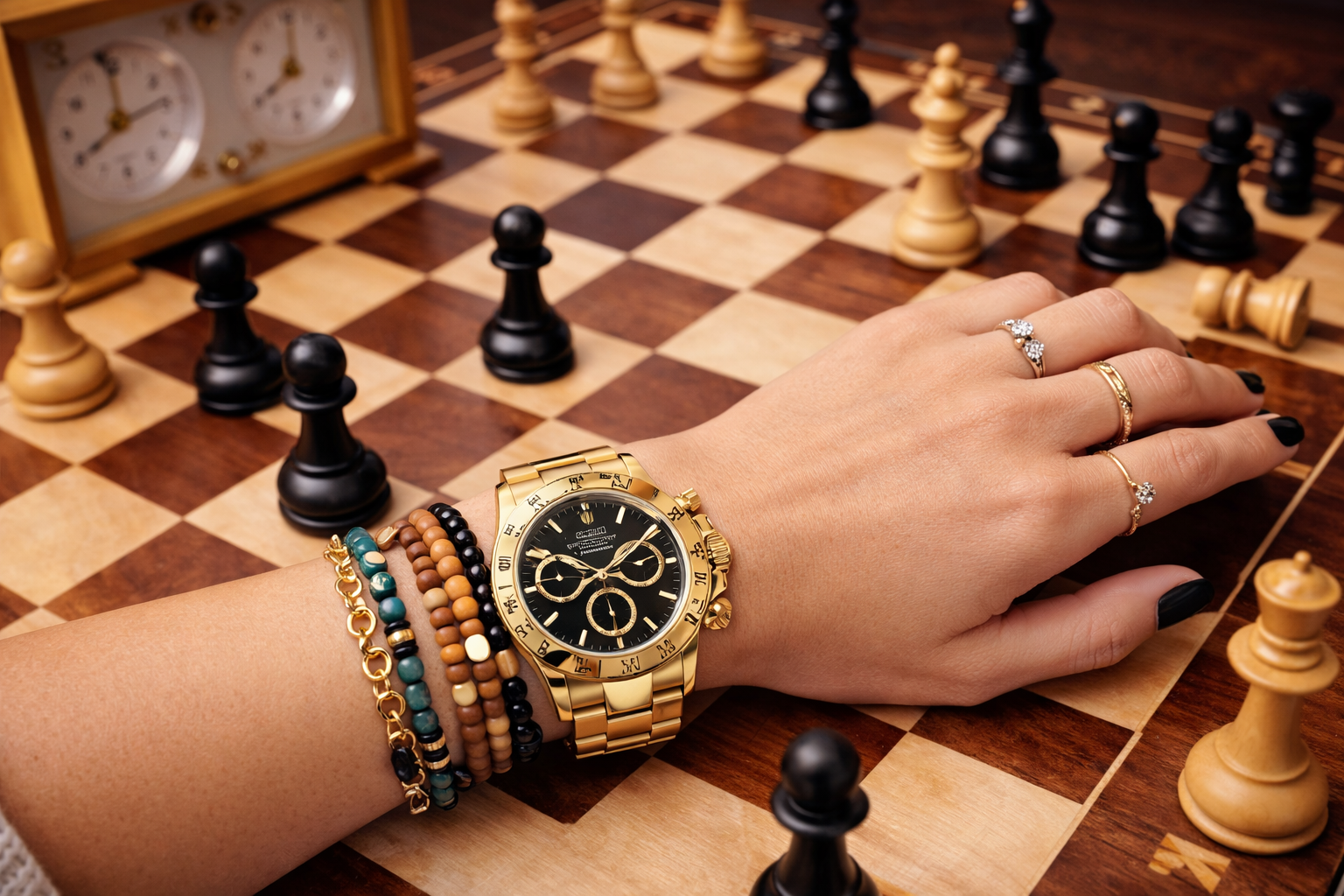
The Art of the Fit: How to Measure a Watch Band Correctly
Getting the Perfect Size for Comfort, Style, and Longevity
Welcome, watch connoisseurs and Rolex enthusiasts, to another essential guide in your luxury timekeeping journey. While the heart of a Rolex lies in its movement and heritage, the bracelet or strap is what connects that craftsmanship to you — quite literally. And when it comes to comfort, proportion, and wearability, nothing is more important than a properly sized watch band. Today, we explore how to measure a watch band correctly, whether you’re replacing a strap, customizing your fit, or shopping for your next timepiece.
Why Watch Band Sizing Matters
An improperly fitted watch band can affect more than just comfort. A band that’s too tight may wear out prematurely or damage the lugs, while a loose one may shift awkwardly, affecting how your Rolex sits on your wrist — and possibly even risking a fall. Whether you're wearing a classic Datejust, a sporty Submariner, or a refined Day-Date, getting the band size right ensures not only better wear but a better aesthetic.
Strap Materials
Rolex offers a range of high-quality strap materials, each providing a unique aesthetic and feel.
|
Material |
Characteristics |
|---|---|
|
Oystersteel |
Durable, corrosion-resistant, classic Rolex look |
|
Gold (Yellow, White, Everose) |
Luxurious, timeless, elegant |
|
Platinum |
Premium, rare, sophisticated |
|
Leather |
Comfortable, versatile, wide range of colors and textures |
|
Rubber (Oysterflex) |
Sporty, comfortable, water-resistant |
|
Fabric (NATO/Perlon) |
Lightweight, casual, customizable |
Popular Strap Styles
Rolex and third-party manufacturers offer a variety of strap styles to suit different preferences and occasions.
- Oyster Bracelet: The most iconic Rolex bracelet, known for its robustness and comfort.
- Jubilee Bracelet: A more dressy option with five-piece links, offering a sophisticated look.
- President Bracelet: Exclusive to certain Rolex models, featuring semi-circular three-piece links for a refined appearance.
- Oysterflex Bracelet: A high-performance elastomer bracelet designed for comfort and durability in sporty contexts.
- Leather Straps: Available in various grains and colors, perfect for a classic or formal look.
- NATO/Perlon Straps: Popular among enthusiasts for their versatility and ability to change the watch's character.
Choosing Your Rolex Strap
When selecting a strap for your Rolex, consider the following factors:
- Watch Model: Ensure compatibility with your specific Rolex model and lug width.
- Occasion: Choose a strap that suits the primary use of the watch (e.g., formal events, sports, daily wear).
- Personal Style: Select a material and color that reflects your personal aesthetic.
- Comfort: Different materials and styles offer varying levels of comfort on the wrist.
- Maintenance: Consider the care required for each material to maintain its appearance and longevity.
|
Material |
What It Refers To |
|---|---|
|
Lug Width |
The distance between the lugs (where the band attaches to the case) — usually in millimeters (mm). |
|
Band Length |
The combined length of the two strap pieces, not including the watch case. Usually in millimeters or inches. |
- Lug width is critical for compatibility. For example, if your Rolex has a 20mm lug width, the band must also be 20mm at the attachment point.
- Band length ensures a proper wrap around your wrist. Too short? The clasp won’t close. Too long? It flaps or shifts. Getting both measurements right makes the difference between a comfortable fit and a frustrating one.
How to Measure a Watch Band: A Step-by-Step Guide
Getting the right fit for your watch band is more than just a matter of comfort — it ensures proper wear, maintains the aesthetic of your timepiece, and protects its structural integrity. Whether you’re replacing a strap, customizing a fit, or simply planning your next purchase, accurate measurements are essential. Below is a professional, step-by-step method to measure both the lug width and band length of your Rolex or any other watch.
Step 1: Gather the Necessary Tools
Start by assembling the right tools: a digital or metric ruler (in millimeters), a flexible measuring tape or strip of paper, and a clean, flat, well-lit surface. For greater precision—especially when measuring lug width—you may also use a vernier caliper.
Step 2: Measure the Lug Width
Lug width is the internal distance between the two lugs where the strap attaches to the watch case. Lay the watch face-up on your work surface to stabilize it. Using a ruler or caliper, measure from the inner edge of one lug to the inner edge of the opposite lug. Record the measurement in millimeters.
Note: Do not measure the strap itself — only the watch case’s lug spacing. Common Rolex lug widths include 20mm, 21mm, and 22mm.
Step 3: Measure the Band Length
Watch bands are typically made of two parts: the long side (with holes) and the short side (with the buckle or clasp). Remove the existing strap if necessary, and measure each section separately — from the spring bar to the end of the strap (excluding the buckle or clasp). Add both lengths to get the total band length.
If you're measuring your wrist instead, wrap a flexible tape or a strip of paper snugly around your wrist where you usually wear your watch. Mark the overlap point, then lay it flat and measure in millimeters. Add 10–20mm for comfort, and adjust for the clasp or buckle size as needed.
Step 4: Understand the Fit Preferences
Fit is subjective and varies by strap material. Rolex metal bracelets (e.g., Oyster, President) often feature micro-adjustments or extension systems like the Easylink or Glidelock, providing room for minor sizing tweaks. However, leather, rubber, and fabric straps require more precise sizing since they offer limited flexibility once installed. For metal bands, link adjustment may be required after determining the total strap length.
Step 5: Confirm Strap Compatibility
With measurements in hand, ensure the new strap matches your watch’s specifications: the lug width must match exactly (e.g., a 20mm strap for a 20mm lug), and the band length should suit your wrist size. Many replacement straps are sold in S, M, or L options, so consulting a sizing chart is often helpful.
Tip: For proprietary Rolex straps such as Oysterflex or integrated bracelets, professional consultation is highly recommended.
The Final Link: Precision Meets Personalization
In the world of fine timepieces, every detail matters — and your watch band is no exception. A well-measured strap ensures that your Rolex doesn’t just look right, but feels right too. From understanding lug width to selecting the correct band length and style, each step brings you closer to a perfect fit that honors both form and function.
Whether you're customizing your daily companion or preparing to invest in a new strap, taking the time to measure properly is a small but meaningful act of care for your watch — and yourself. For ultimate accuracy and long-term comfort, always consult sizing charts, use precise tools, and when in doubt, turn to a Rolex-certified expert. In the art of luxury watch ownership, the perfect fit is not just a matter of measurement — it’s a matter of pride.
***Image credit: Photo by The Parlor by Jomashop***