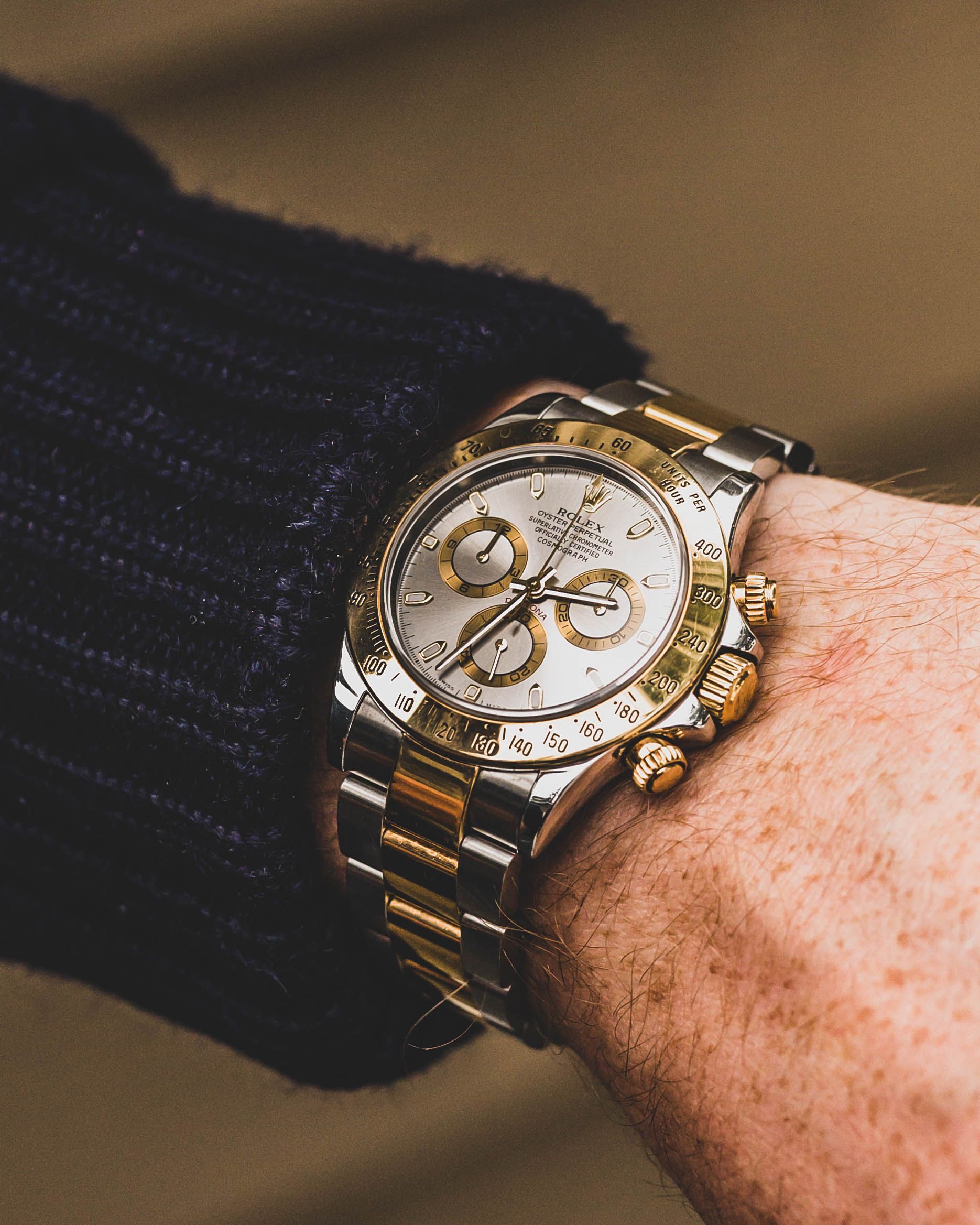
How to Identify a Real Rolex Watch Before Buying
A real Rolex should have consistent finishing, precise printing, correct proportions, high-quality materials, and a movement appropriate for its reference. Check the watch against its reference details, inspect the serial and model markings, examine the movement when possible, and verify its history. Most importantly, have the watch professionally authenticated before making a significant purchase.
What Makes a Rolex Watch Authentic
Authenticity means more than finding a few features that look correct. A genuine Rolex is a complete system in which the case, dial, movement, hands, crown, bracelet, clasp, and markings are designed to work together according to a specific reference.
Counterfeit watches often copy the overall appearance but fail when individual components are examined closely. A dial may have the correct general design while using incorrect fonts. A case may look convincing but have inaccurate proportions. A movement may resemble the genuine mechanism while using a different construction.
This is why identifying a real Rolex requires a process rather than relying on one visual trick.
Why Rolex Authentication Matters Before Buying
The financial risk of buying a counterfeit watch can be substantial. A watch that appears genuine in photographs may contain non-original components, a counterfeit movement, or a mixture of genuine and aftermarket parts.
There is also an important difference between a fake Rolex and a genuine Rolex that has been modified. A watch can contain authentic Rolex components but still have replaced, altered, or aftermarket parts that affect its originality and value.
Authentication therefore protects more than your money. It helps establish what you are actually buying and whether the watch matches the description provided by the seller.
Start With the Exact Rolex Reference
One of the strongest methods for identifying a genuine Rolex is to determine its exact reference and compare the watch against the specifications associated with that reference.
The reference can help establish the expected case design, bezel, dial configuration, bracelet style, materials, movement family, and production characteristics. These details should make sense together.
For example, if a particular reference was produced with a specific movement and dial configuration, a watch combining unrelated specifications deserves closer examination. Differences do not automatically prove that the watch is fake because Rolex watches can be serviced and components can sometimes be replaced. However, inconsistencies should be investigated rather than ignored.
Examine the Rolex Dial Carefully
The dial is one of the first places to look when checking a Rolex. Genuine Rolex dials are known for exceptionally consistent printing, spacing, finishing, and alignment.
Look closely at the Rolex crown, hour markers, minute track, text, and applied indexes. The lettering should appear clean and properly positioned. Printing that looks too thick, too thin, uneven, blurry, or poorly aligned can be a warning sign.
The dial should also match the reference. A seller may describe a watch as a particular model while the dial actually belongs to another configuration. Comparing the dial layout with known specifications for the exact reference can reveal inconsistencies.
Do not judge authenticity solely from a photograph. Lighting, camera quality, compression, and reflections can make genuine printing appear imperfect.
Check the Date Display and Cyclops Lens
On Rolex models equipped with a date display and Cyclops lens, the magnification and alignment deserve attention. The date should sit correctly within the window, and the magnifying lens should be properly positioned over it.
However, the common belief that the Cyclops lens alone can prove authenticity is unreliable. Counterfeit manufacturers have become much better at reproducing recognizable visual characteristics.
The correct approach is to treat the date window and magnification as part of the overall examination. If the date, lens, dial, case proportions, and movement all appear correct, confidence increases. If several details are inconsistent, professional inspection becomes especially important.
Inspect the Case and Finishing
Rolex cases have carefully controlled proportions and finishing. Examine the transitions between polished and brushed surfaces, the shape of the lugs, the bezel, and the overall symmetry of the case.
Poorly finished edges, excessive polishing, unusual case shapes, rough surfaces, or inconsistent transitions can indicate a problem. A heavily polished genuine Rolex can also look different from its original factory condition, so this inspection should distinguish between authenticity and condition.
Case thickness can also be relevant when comparing a watch with its expected reference specifications. A case that appears noticeably different from the correct proportions deserves further investigation.
Look at the Rolex Crown and Crown Guards
The winding crown is another important area to inspect. The Rolex crown emblem should be properly formed and positioned, while the crown and tube should fit correctly with the case.
Depending on the model and production period, crown markings and configurations can differ. This is important because not every genuine Rolex has identical markings.
A common mistake is assuming that one particular crown marking must appear on every Rolex. Authenticity should always be judged against the specific reference and production period rather than a universal checklist.
Inspect the Bracelet and Clasp
A genuine Rolex bracelet should feel substantial and well engineered. Examine the links, finishing, articulation, clasp construction, engraving, and alignment.
The bracelet should also make sense for the watch reference. A genuine Rolex case combined with an incorrect bracelet does not necessarily mean the entire watch is counterfeit, but it can affect originality and value.
Pay particular attention to poor machining, sharp edges where they should not exist, loose construction, inconsistent finishing, or markings that appear incorrectly formed.
The clasp can provide useful evidence, but it should not be treated as conclusive by itself. Parts can be replaced during servicing, and genuine older components can sometimes appear different from newer ones.
Check the Serial and Model Markings
Serial and model markings can provide valuable information when authenticating a Rolex, but they should never be considered proof by themselves.
Depending on the watch's age and model, these markings may be found in different locations. Older Rolex watches can have characteristics that differ from newer examples, and production practices have changed over time.
A serial number that appears to correspond to a Rolex does not automatically prove that the watch is genuine. Counterfeit watches can use copied or fabricated numbers.
The more reliable approach is to compare the markings with the watch's physical characteristics, reference information, movement, documentation, and ownership history.
Examine the Movement
For serious authentication, the movement is one of the most important components to examine.
Rolex mechanical movements have specific architecture, finishing, component layouts, and construction characteristics. A qualified watchmaker can identify whether the movement is consistent with the claimed model and reference.
A fake watch may use a generic automatic movement hidden behind a caseback. More sophisticated counterfeits may use movements designed to imitate the appearance of a genuine Rolex caliber.
This is why opening the watch should be done by someone qualified. Improperly opening a watch can introduce dust, damage components, or compromise water resistance.
A movement examination can also reveal whether a supposedly original watch contains replacement or non-original components.
Do Not Rely on the Sweeping Seconds Hand Myth
One of the most common Rolex myths is that a genuine Rolex can be identified because the seconds hand "sweeps" while a fake ticks once per second.
This is not a reliable authentication method.
Mechanical watches generally produce a series of smaller movements rather than a single large jump, but the visual effect varies depending on the movement, frequency, viewing conditions, and camera recording. Some counterfeit mechanical watches can also imitate this appearance.
The movement itself is far more useful than simply watching the seconds hand.
Understand the Role of Weight and Materials
Weight can sometimes provide useful information, particularly when a watch feels noticeably lighter than expected for its reference and material.
However, weight alone cannot authenticate a Rolex. Different references use different materials, bracelets, movements, and configurations. A genuine watch can also have missing or replaced components.
Material should therefore be evaluated together with case construction, bracelet design, movement, and reference specifications.
Review the Documentation and Purchase History
Original documentation can strengthen confidence in a purchase, especially when the paperwork is consistent with the watch.
Look at the model information, dates, serial-related details where applicable, service records, and purchase history. Documentation should make sense alongside the physical watch.
However, paperwork is not absolute proof. Counterfeit documents can be produced, and genuine documents can sometimes be separated from the watch they originally accompanied.
The strongest evidence comes from consistency between the watch, its history, and independent authentication.
Compare the Watch With Its Reference Specifications
Reference comparison is one of the most effective practical methods available to a buyer.
Instead of asking whether the watch "looks like a Rolex," ask whether every major element is appropriate for the exact reference. The case shape, bezel, dial, hands, date display, movement, bracelet, clasp, and materials should form a coherent configuration.
This approach is particularly useful because counterfeiters often focus on appearance rather than complete technical accuracy.
A watch that passes several independent comparisons deserves more confidence than one that merely looks convincing in a photograph.
Why Photographs Are Not Enough
Online listings create a major challenge for buyers because photographs can hide important details.
High-resolution images can still fail to show movement construction, caseback condition, bracelet wear, internal markings, or subtle differences in finishing. Sellers can also select angles that make questionable details difficult to see.
Before buying a Rolex online, request clear photographs of the dial, case, sides, clasp, bracelet, serial-related areas where appropriate, and any available documentation. If the seller refuses reasonable authentication requests, that should influence your purchasing decision.
For expensive purchases, an in-person inspection is preferable whenever practical.
Common Mistakes Buyers Make
One common mistake is believing that a single feature can prove authenticity. Buyers may focus on the crown logo, serial number, Cyclops magnification, weight, or seconds hand and assume that passing one test means the watch is genuine.
Another mistake is trusting a low price because the seller claims it is an urgent sale. A discount does not prove that a watch is fake, but an unusually attractive price combined with weak documentation, pressure to pay quickly, or refusal to allow inspection should create caution.
Buyers also sometimes assume that a watch is genuine because it comes with a box and papers. Packaging can support the history of a watch, but it should not replace physical authentication.
Common Myths and the Real Facts
A popular myth is that every genuine Rolex must have a particular serial-number location or engraving style. In reality, Rolex production has changed over time, so authentication should account for the age and reference of the watch.
Another myth is that all genuine Rolex watches have exactly the same type of movement behavior. Different Rolex movements operate at different specifications, and visual inspection of the seconds hand is not sufficient to establish authenticity.
It is also a mistake to believe that an expensive Rolex must be genuine. Counterfeit watches can be deliberately priced high to appear legitimate.
The real fact is that authentication works best when multiple independent details agree.
What Makes a Rolex Authentication Reliable
Reliable authentication is based on evidence that comes from several parts of the watch. The reference should match the physical configuration. The movement should be appropriate. The dial and case should have correct construction and finishing. Markings should be consistent with the watch's production characteristics.
Professional inspection adds another layer of confidence because an experienced watchmaker can evaluate details that are difficult for an ordinary buyer to verify.
The goal is not to find one magical authentication feature. The goal is to determine whether the entire watch makes technical and historical sense.
How to Buy a Rolex With Greater Confidence
A careful buyer should slow down when a purchase involves significant money. Ask questions about ownership history, servicing, condition, originality, and documentation before agreeing to the transaction.
A seller who is comfortable with legitimate inspection is generally easier to evaluate than one who creates pressure and discourages independent verification.
If the watch is expensive enough that losing the purchase amount would be financially painful, professional authentication is worth considering before payment. The cost of inspection is usually small compared with the potential cost of buying a counterfeit or misrepresented watch.
Summary
Identifying a real Rolex requires more than checking whether the watch looks authentic. The most reliable approach is to compare the exact reference with the watch's case, dial, movement, bracelet, clasp, markings, materials, and history. Individual details can provide clues, but no single visual feature should be treated as conclusive proof.
The movement, reference consistency, quality of construction, and independent professional examination are especially valuable when the purchase involves a substantial amount of money.
Key Takeaways
A genuine Rolex should make sense as a complete watch. Its reference, movement, case, dial, bracelet, markings, and historical information should be consistent with one another. Counterfeit watches often reveal themselves through small inconsistencies rather than one obvious defect.
Do not allow an attractive price, impressive photographs, box and papers, or a convincing seconds hand to replace proper authentication. The safest decision is based on several forms of evidence and, when necessary, an inspection by a qualified professional.
The most important rule is simple: if you cannot confidently establish what the watch is, do not rush to buy it.
Frequently Asked Questions
How can I tell if a Rolex is real?
A Rolex can be evaluated by checking its exact reference, dial printing, case construction, bracelet, clasp, markings, movement, materials, and documentation. No single feature proves authenticity. For an expensive purchase, professional authentication provides much stronger confidence than visual inspection alone.
Can I authenticate a Rolex by looking at the serial number?
No. A serial number can provide useful information, but it is not sufficient proof of authenticity. Counterfeit watches can use copied or fabricated serial numbers, and genuine watches can have replaced components. The serial information should be considered together with the reference, movement, case, and overall construction.
Does a real Rolex have a smooth sweeping seconds hand?
A mechanical Rolex seconds hand generally moves in multiple small increments, creating a smooth-looking motion. However, watching the seconds hand is not a reliable authentication test because movement behavior can vary and counterfeit watches can imitate the appearance.
Can box and papers prove that a Rolex is genuine?
No. Original-looking packaging and documents can support a watch's history, but they do not independently prove authenticity. Documents can be separated from their original watch, and counterfeit paperwork can exist. The physical watch remains the most important subject of authentication.
Is a heavy Rolex automatically genuine?
No. Weight can provide a useful clue, but it is not an authentication method by itself. Rolex produces watches in different materials and configurations, and genuine watches can also have missing or replaced components. Weight should be evaluated alongside the reference and construction.
Should I open a Rolex to check the movement?
The movement can provide some of the strongest authentication evidence, but opening the watch should be left to a qualified watchmaker. Improper handling can damage the watch or affect its water resistance. For a valuable purchase, professional movement inspection is a safer approach.
What should I do if I am still unsure whether a Rolex is real?
Do not rely on a guess when a significant amount of money is involved. Pause the transaction and have the watch examined by a qualified professional who can assess the movement and physical components. A legitimate seller should understand the importance of authentication when purchasing a valuable pre-owned watch.
Conclusion
Knowing how to identify a real Rolex watch before buying can protect you from one of the most expensive mistakes a watch buyer can make. The key is to look beyond the obvious. A genuine Rolex should have a consistent reference, carefully finished components, an appropriate movement, correct markings, and a believable history.
The strongest authentication process combines detailed visual inspection with technical examination and professional verification when needed. Avoid shortcuts based on one feature, one photograph, or one document.
If you are considering a Rolex purchase and anything about the watch does not match its claimed reference or history, take a step back before committing. A little patience and proper verification can turn an uncertain purchase into a confident one, while helping ensure that the watch you buy is genuinely the watch you believe it to be.